
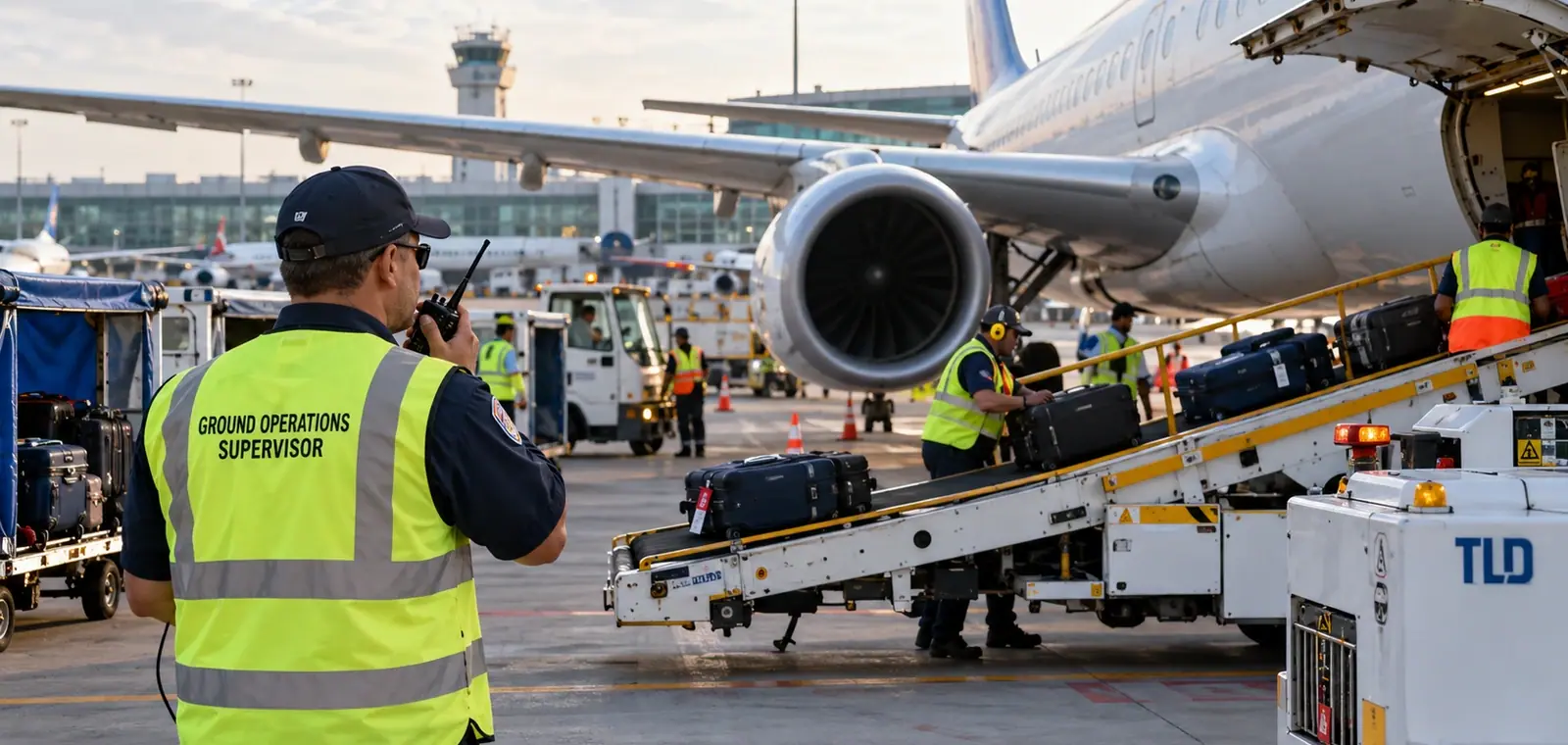
Staffing demand follows the flight schedule
Passenger handling, ramp support, baggage, loading, cleaning and turnaround services vary by flight peaks, aircraft type, turnaround time and agreed service levels. Average staffing assumptions can leave critical gaps at peaks and idle capacity between waves.
Model demand, qualifications and time together
Define workload and service windows by station, then integrate shift patterns, availability, competency records, rest and overtime restrictions. Evaluate cross-station support, contingency staffing and the role of contracted services.
Maintenance workforce needs a separate model
Technical operations add aircraft/engine approvals, task-card hours, NDT skills, tooling, hangar or bay access, job dependencies and certifying responsibilities. These requirements overlap with ground services but cannot be represented by identical roster rules.
Measure results without relaxing safety
Potential measures include demand coverage, waiting time on critical tasks, overtime, cross-station moves, workload balance and service punctuality. Qualification and safety controls are hard constraints, not efficiency trade-offs.
Measure the outcome. Verify the improvement.
Recommendations must account for operating constraints, data reliability, ownership and agreed acceptance measures before they become workable business solutions.
Discuss Your Priorities ↗