
Logistics is an interconnected service network
Logistics extends far beyond warehousing. Line-haul, transhipment, sorting, order fulfilment, last-mile delivery, returns and customer support all affect the promised delivery time, cargo integrity and total operating cost.
Two core service propositions
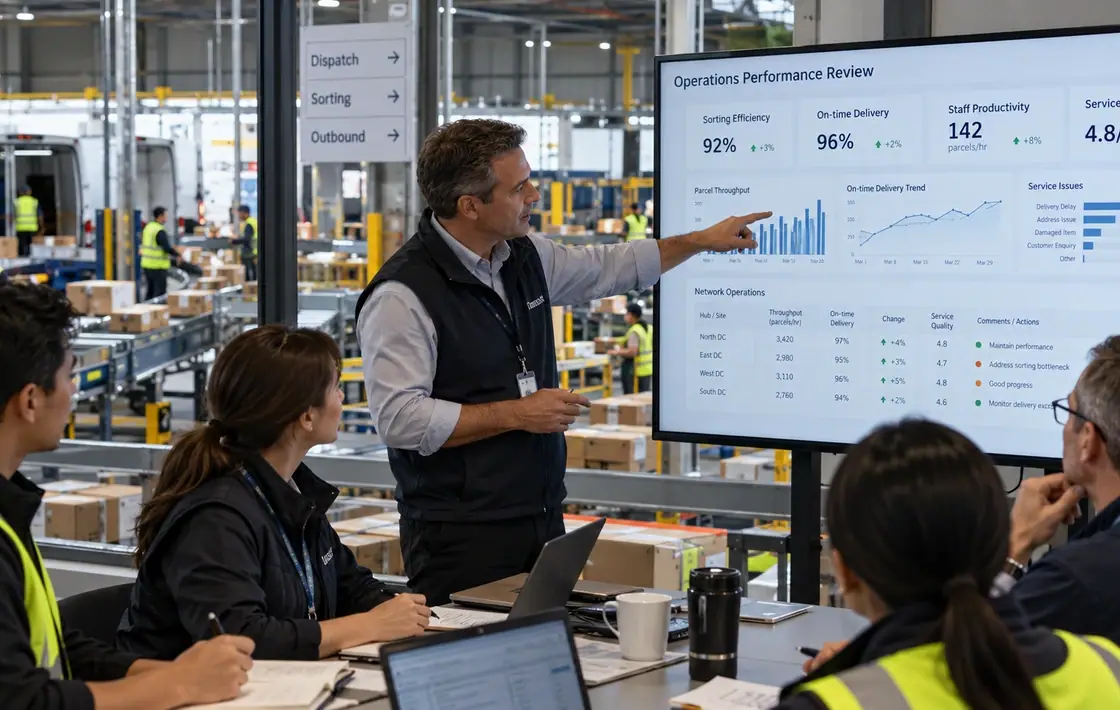
Logistics operations KPIs and performance governance: a common management language for service levels, transport networks, costs, quality, assets, exceptions, labour and profitability.
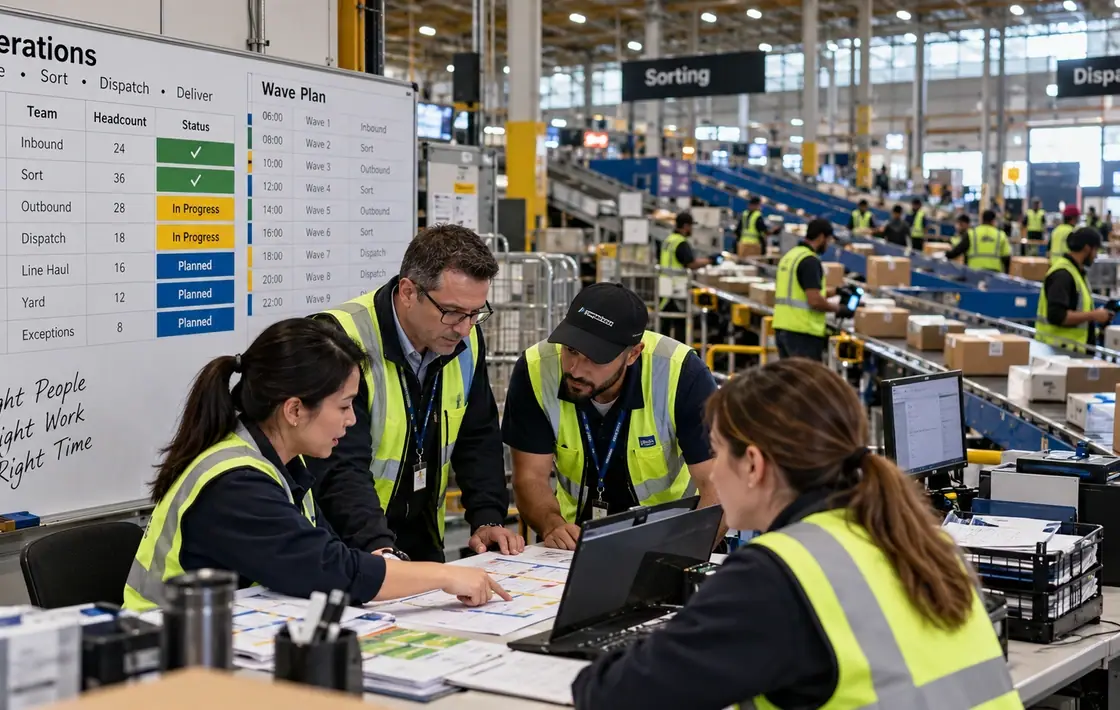
Workforce scheduling and intelligent dispatch: configure feasible staffing around parcel volumes, work windows, competencies, hours, site demand and delivery commitments.
Use metrics appropriate to each business model
Parcel networks, third-party fulfilment, cold chain and cross-border services operate under different service agreements and data structures. Define the relevant denominator—shipment, order, item, route or site—before comparing performance.
A pragmatic implementation sequence
Start with costly service exceptions and operational bottlenecks. Align TMS, WMS, OMS, fleet and HR event data, then test a small number of priority scenarios. Scale only when measurable gains in errors, waiting or unproductive hours are established.
Measure the outcome. Verify the improvement.
Recommendations must account for operating constraints, data reliability, ownership and agreed acceptance measures before they become workable business solutions.
Discuss Your Priorities ↗