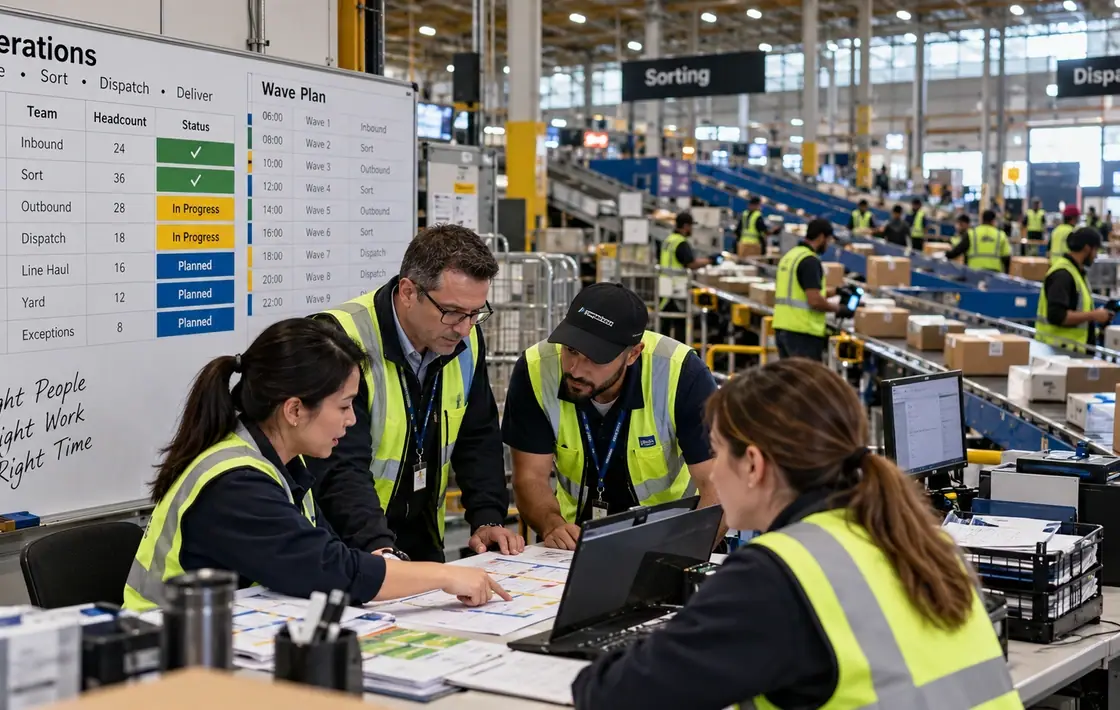
Start with the customer promise
Customers care about timely, complete, correct and safe delivery. Operations managers need to understand the drivers of delay, damage, failed delivery, empty mileage and excess labour expenditure.
A balanced set of operating dimensions
Service and SLA: on-time delivery, complete fulfilment, complaints and exceptions.
Transportation and network: vehicle fill, trunk connections, transhipment and routing.
Warehousing and flow: receiving, picking, sorting, throughput and inventory accuracy.
Costs and assets: cost per operation, fleet and equipment utilisation, overtime.
Quality and risk: damage, temperature excursions, customs or documentation exceptions.
Profitability: contribution by client, channel and service line.
Agree the denominator, event and timestamp
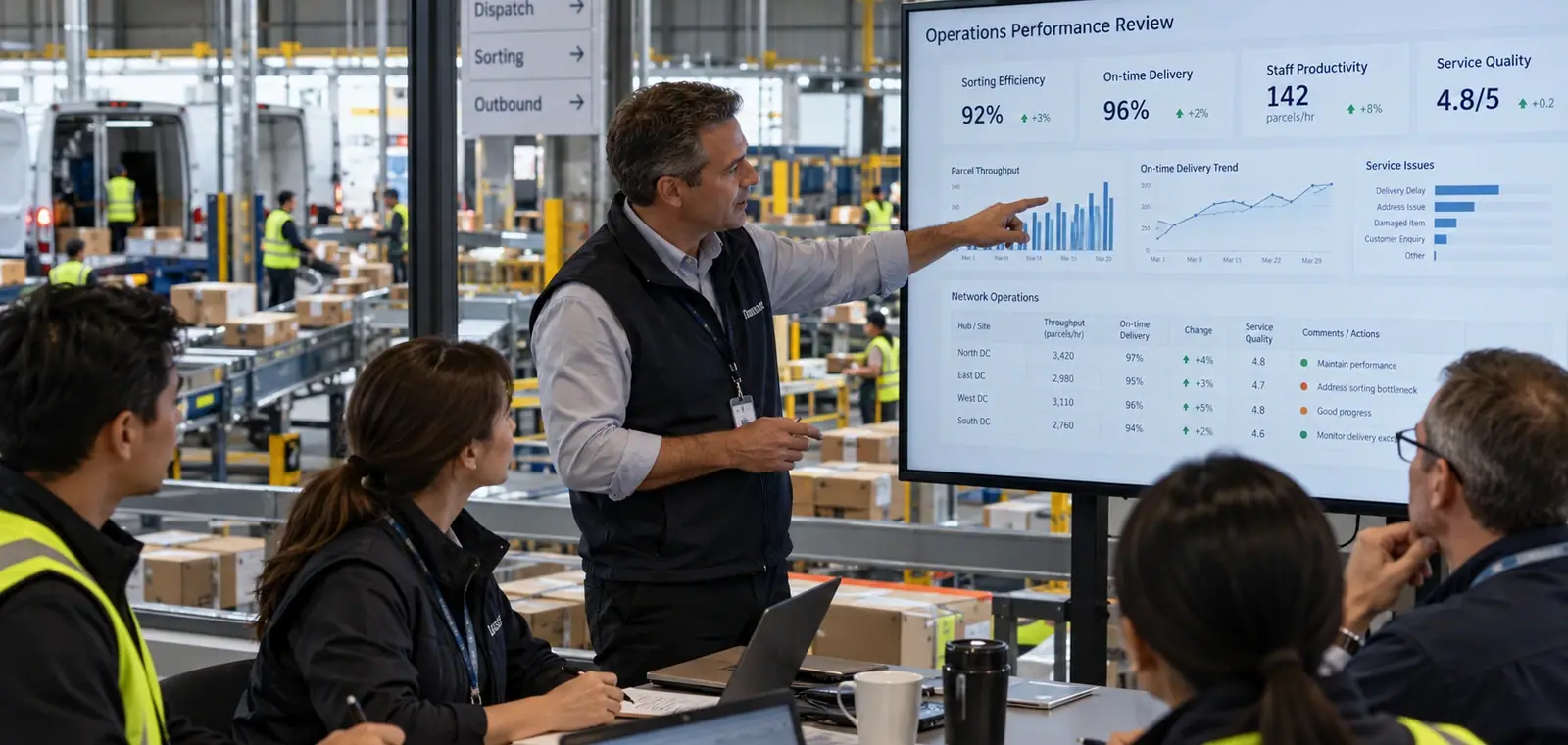
OTP, OTIF, cost per shipment and capacity per site vary by contract, operating model and cutoff definition. Every KPI requires an agreed formula, exceptions, owner, refresh frequency and auditable source events.
Turn monitoring into improvement governance
Provide distinct executive, station, network and exception-management views. Connect operational root causes and improvement work to named accountable owners and measurable resolution milestones.
Measure the outcome. Verify the improvement.
Recommendations must account for operating constraints, data reliability, ownership and agreed acceptance measures before they become workable business solutions.
Discuss Your Priorities ↗